One Simple Habit That Can Change How You Feel All Day
Mornings can be hectic. You're rushing to get out the door, grabbing a cup of coffee, and maybe skipping breakfast altogether. Before you know it, lunchtime rolls around and you realize you haven't eaten anything all morning.
One of the simplest recommendations I make to many of my patients is to start the day with a nourishing breakfast. It doesn't have to be complicated, but giving your body the nutrients it needs first thing in the morning can have a significant impact on how you feel throughout the day.
Eating a nourishing breakfast helps set the tone for the day. When we regularly skip breakfast, we're asking our bodies to run on empty. While we may get by for a while, many people find that it catches up with them in the form of fatigue, cravings, poor concentration, or energy crashes later in the day.

Why breakfast matters
I'm not talking about a bowl of sugary cereal or a pastry grabbed on the way out the door. A balanced breakfast that contains fiber, healthy fats, and protein provides steady fuel for your body and brain.
Starting your day with a nourishing meal can:
Support steady energy throughout the day
Help stabilize blood sugar
Improve focus and concentration
Kick-start your metabolism
Help regulate your appetite throughout the day
Many people think skipping breakfast will help them lose weight. Interestingly, it often has the opposite effect. Going too long without eating can leave you overly hungry later in the day, making it easier to snack on processed foods or overeat at a later meal.
Making a warm, nourishing breakfast a regular part of your morning routine may help support:
More consistent energy
Fewer afternoon crashes
Less snacking
Improved mood
Better focus throughout the day
Why I recommend a warm breakfast
From an East Asian Medicine perspective, digestion is often compared to an internal fire. Just as a fire burns best when it has the proper fuel, our digestive system functions best when it's supported with foods that are easier to break down.
Warm, cooked foods generally require less energy to digest than cold or raw foods. Because of this, the body can spend more of its energy absorbing nutrients rather than working to warm and process the food. Over time, supporting digestion in this way may help promote better energy, healthier digestion, and an overall greater sense of well-being.
My favorite breakfast
Patients often ask what I eat for breakfast, so I thought I'd share the meal I make most mornings.
I actually started making this years ago while I was in graduate school. I didn't have the time or energy to prepare breakfasts, but I knew I needed something that would keep me full, support my energy, and help me stay focused through long days of classes and studying.
Over the years I've continued to tweak it, and it's become one of my favorite meals. It's packed with fiber, antioxidants, healthy fats, and nourishing carbohydrates. Best of all, it's incredibly easy to prepare.
I usually make enough for about five mornings at a time and simply warm up a portion on the stove each day.
The best part is that it's completely customizable. There isn't one "right" recipe—use what you enjoy and what you already have at home.
And one confession...
I don't actually measure anything. I'm Italian—everything is eyeballed! So think of these measurements as a general guide rather than exact amounts.
Nourishing Breakfast Recipe
This customizable quinoa bowl is easy to adapt based on what you have on hand and can be prepared in larger batches to enjoy throughout the week. Add what you want. Don’t add what you don’t want. This is a list of optional ingredients. If something else sounds good to you, try it out!

Quinoa breakfast bowl.
Base - congee-like consistency
½ cup dry quinoa (makes approximately 5 servings)
2 sweet potatoes
Chia seeds - 1 tbsp per serving
Unsweetened almond, oat, or coconut milk
Water, as needed
Fruit (Choose One)
½ apple, diced
½ pear, diced
Raisins
Fresh berries
Warming Spices
Add to taste:
Cinnamon
Cardamom
Ginger
Reishi powder (optional)
Optional Add-Ins
Goji berries
Pumpkin seeds
Sunflower seeds
Walnuts
Almonds
Toppings
Granola
Fresh berries
Directions
1. Cook the Quinoa
Cook the quinoa according to the package directions. I usually prepare ½ cup of dry quinoa, which gives me about five breakfasts.
2. Cook the Sweet Potato
Peel and cube the sweet potato. Cover with water, bring to a boil, then reduce to a simmer until fork tender. Drain.
3. Build Your Breakfast
For each serving, combine approximately:
¼ cup cooked quinoa
½ cup cooked sweet potato
Pour in enough alternative milk and/or water to reach your preferred consistency.
4. Add the Chia Seeds
Chia seeds can be added in one of two ways:
Cook them directly into the breakfast. Stir them into the pot while everything is gently simmering.
Or soak them first. Combine the chia seeds with water and let them sit for 10–20 minutes. As they absorb the water, they develop a soft, gel-like coating called mucilage, a type of soluble fiber. This gel helps create a creamy texture while adding fiber that supports digestion and helps keep you feeling full.
Add your fruit, warming spices, and any optional ingredients you'd like to include.
5. Simmer
Allow everything to gently simmer for about 10–15 minutes, stirring occasionally. Add additional milk or water as needed until it reaches your desired consistency.
Optional Protein Boost
If you'd like additional protein, stir in a scoop of your favorite protein powder before serving.
Finish and Serve
Spoon into a bowl and top with your favorite granola and fresh berries.
Enjoy warm!
A Few Notes from East Asian Medicine
Cinnamon, cardamom, and ginger are traditionally considered warming spices that help support healthy digestion.
Goji berries have long been used to nourish the Liver and Blood and are traditionally associated with supporting eye health.
Beginning the day with a warm, nutrient-dense breakfast may help support digestion, promote steady energy, and provide a more grounded start to the day.
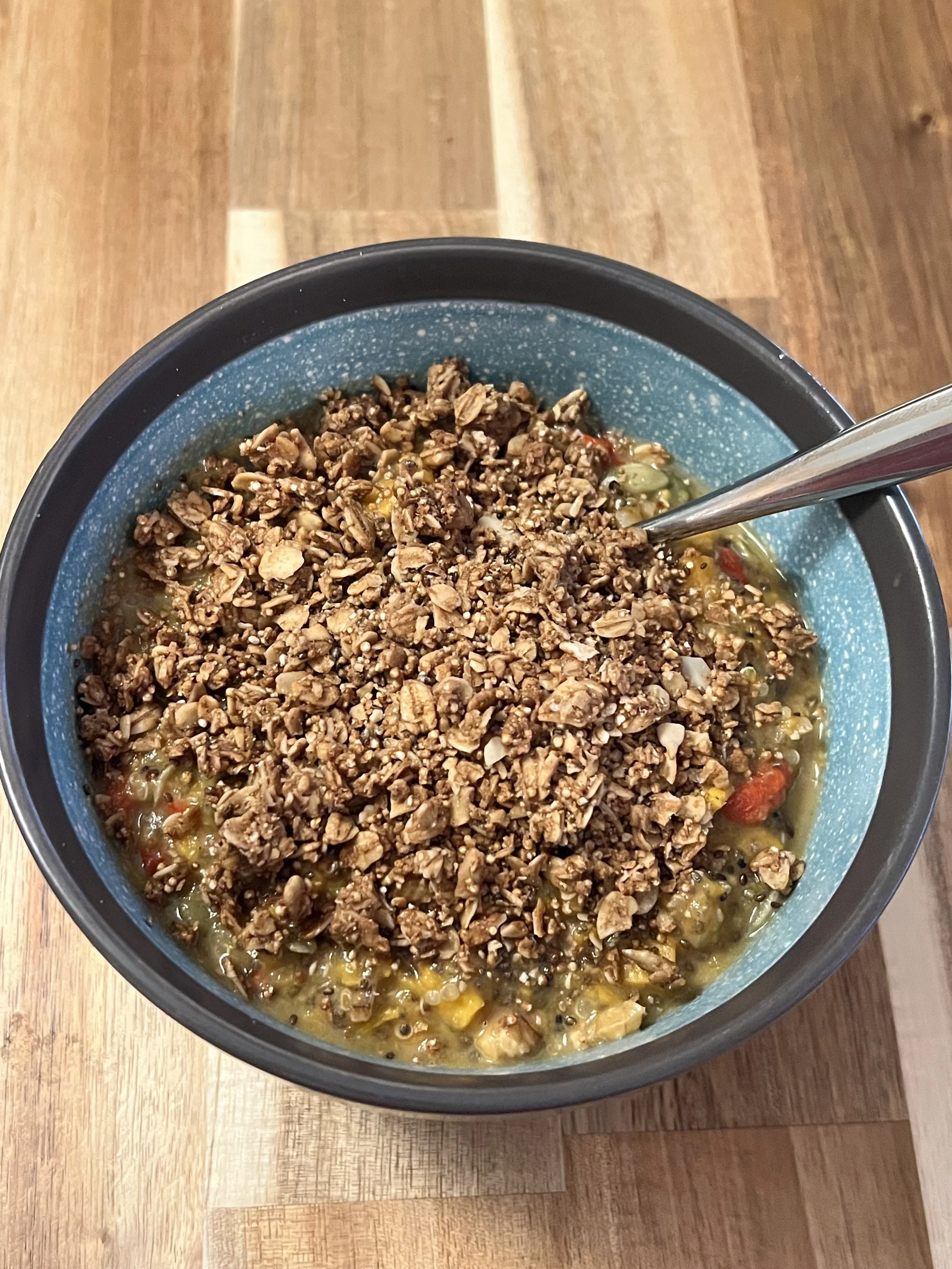
Quinoa breakfast bowl, topped with granola.
Small Changes Add Up
You don't have to overhaul your entire routine overnight. If you're someone who regularly skips breakfast, simply adding a nourishing meal a few mornings each week is a wonderful place to start.
Small, consistent changes are often the ones that create the biggest impact over time.
Food is just one piece of the puzzle. Sleep, movement, stress management, and nutrition all work together to influence how we feel. If you're struggling with fatigue, digestive concerns, hormone imbalances, or simply don't feel like yourself, East Asian Medicine offers a holistic approach that looks at the whole picture.
If you're looking for support creating healthier habits or addressing the root cause of your symptoms, I'd love to help. Schedule a New Patient Consultation to learn how acupuncture and East Asian Medicine can support your health.
Disclaimer: The information shared in this blog is for educational and informational purposes only and is not intended to be a substitute for medical advice, diagnosis, or treatment. Always consult with a qualified healthcare provider regarding your individual health needs before making changes to your healthcare routine.